Pembroke Pines water filtration, softener & reverse osmosis guidance · Serving ZIP codes 33023–33029
Pembroke Pines Water Filtration

LOCAL WATER TREATMENT OPTIONS · BROWARD COUNTY

Water filtration solutions for Pembroke Pines homes.

Compare whole-house filtration, water softeners and reverse osmosis based on your home, your water goals and local Pembroke Pines conditions.

✓ Local water expertise✓ No-obligation options✓ Address-specific guidance
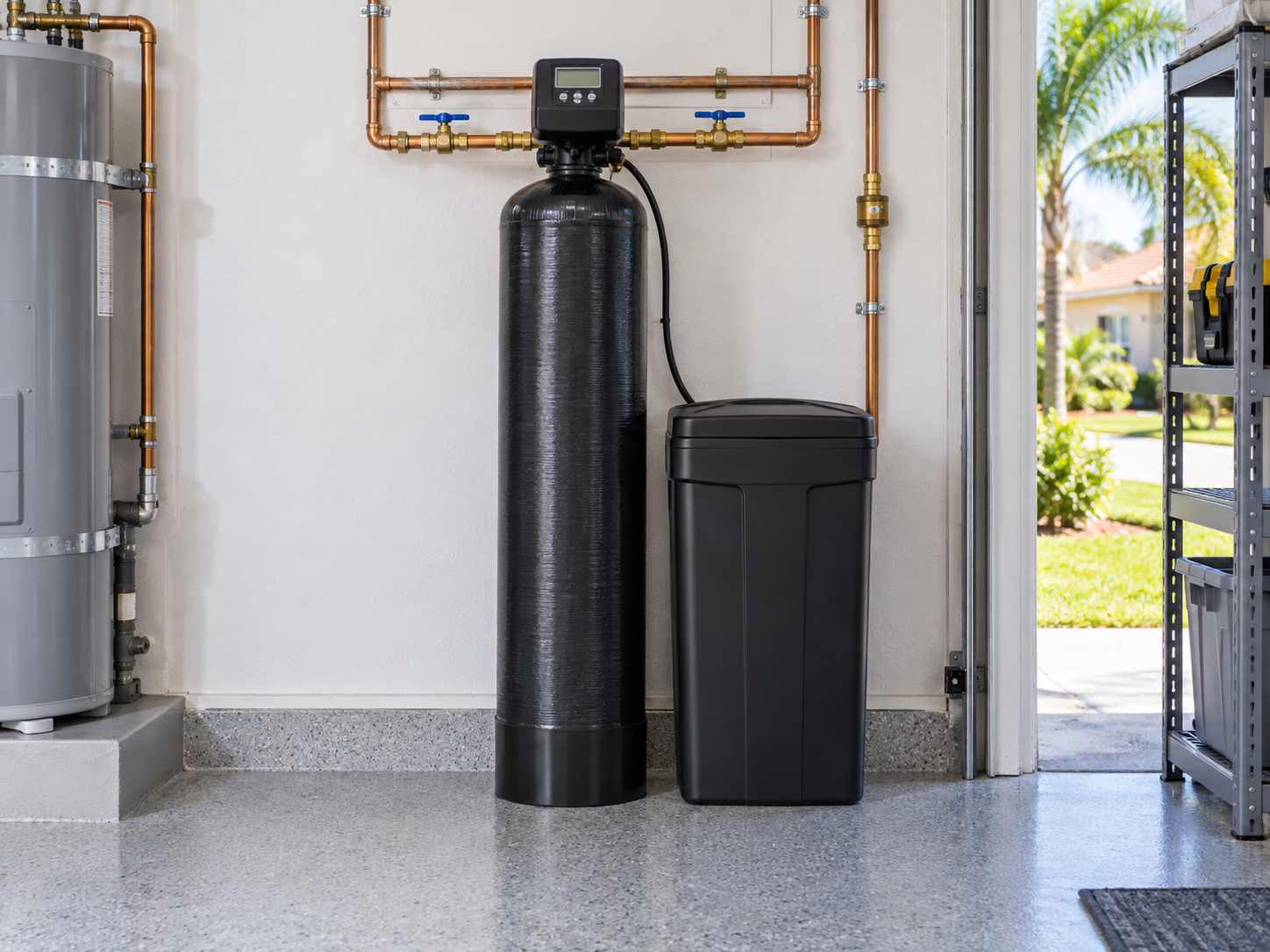
Modern whole-house water filtration system installed in a South Florida garage

PEMBROKE PINES WATER FACT

Biscayne Aquifer

City water uses chloramine for distribution.

See the local water guide →

THE SHORT ANSWER

What water treatment makes sense in Pembroke Pines?

For most homes, the answer depends on whether the priority is disinfectant taste and odor, mineral scale, or drinking-water polishing. A whole-house catalytic-carbon system may be considered for chloramine-related aesthetic goals. A properly sized ion-exchange softener addresses hardness and scale. An under-sink reverse-osmosis system focuses on drinking and cooking water. These technologies solve different problems, and a responsible recommendation begins with the address, household flow and a test.

The City of Pembroke Pines reports that municipal water met federal and state requirements. That matters: treatment should not be sold through fear. The better question is what you want to improve, what the measured water supports, how much flow your household needs, and what maintenance you are willing to own.

LOCAL WATER SNAPSHOT

Useful facts, without the scare tactics.

90–144 ftCity well depth into the Biscayne Aquifer
2.8 ppm2025 chloramine running annual average
26 ppbHighest locational TTHM annual average reported
23 ppbHighest locational HAA5 annual average reported

Pembroke Pines municipal-water facts reference the City of Pembroke Pines 2025 Annual Drinking Water Quality Report (PWS ID 4061083). Utility results describe systemwide monitoring, not the water at an individual home.

HOW TO CHOOSE

Match the equipment to the job.

Whole-house filtration

Treats water near the service entry. Carbon selection, bed volume and contact time matter when chloramine is the target.

Water softening

Ion exchange reduces hardness minerals that contribute to scale. It does not replace carbon or reverse osmosis.

Reverse osmosis

A point-of-use membrane system can reduce many dissolved substances at a dedicated drinking tap. Pretreatment and maintenance protect performance.

A responsible process

  1. Identify the address and utility source.
  2. Define the symptoms and desired outcome.
  3. Test the relevant water parameters.
  4. Size for flow, plumbing and maintenance.
  5. Compare a written scope and lifecycle cost.
  6. Verify operation after installation.

REALISTIC PEMBROKE PINES PRICING

Know the range before anyone visits.

These are transparent South Florida planning ranges for professionally installed equipment—not bait prices. Your written proposal should confirm sizing, plumbing, permit needs, warranty and the final price before work starts.

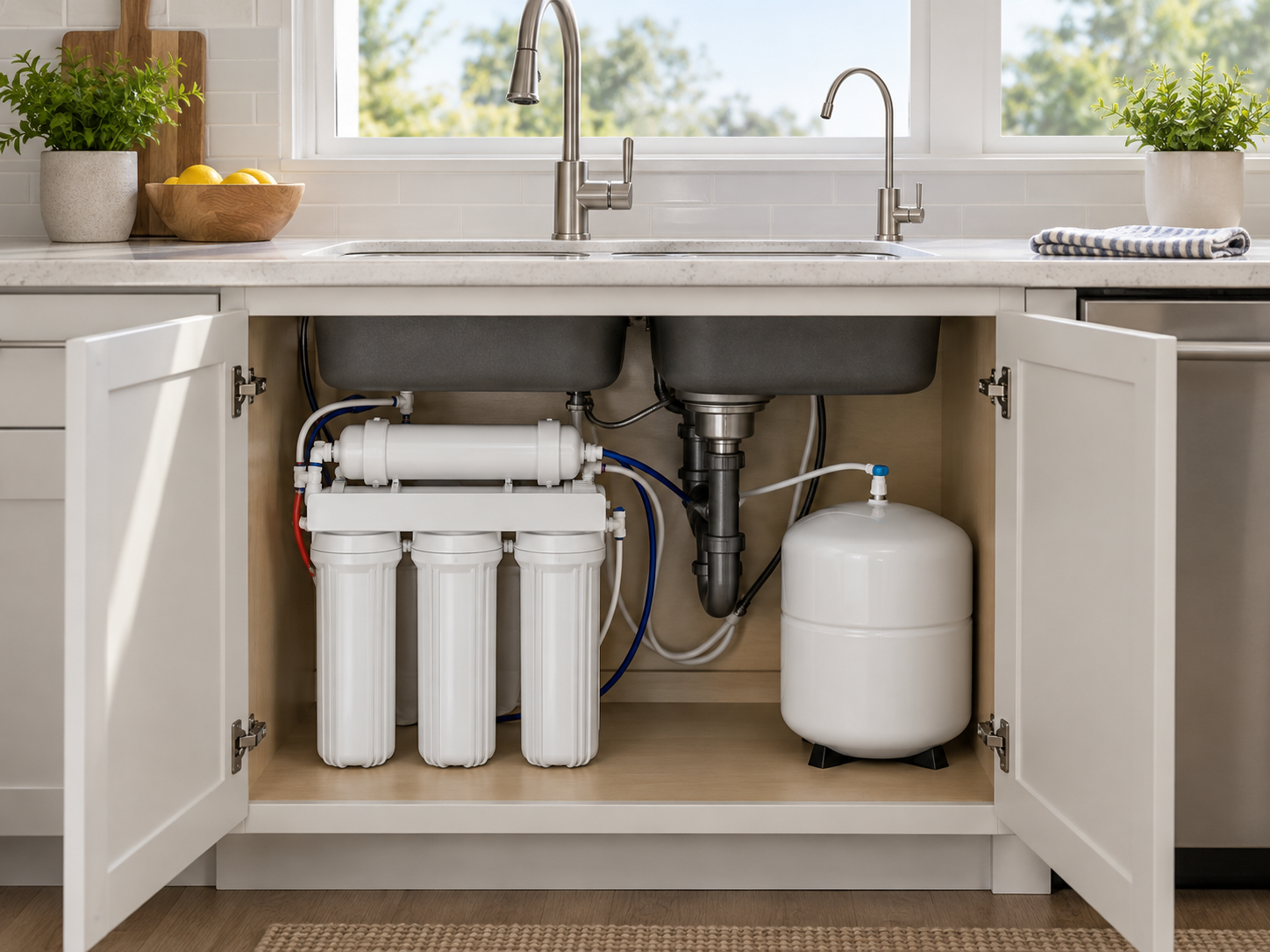
Under-sink reverse osmosis drinking water system
DRINKING WATER

Under-Sink RO

$695–$1,295

Dedicated faucet, storage or tankless configuration, installation and startup.

  • Kitchen drinking and cooking water
  • Optional refrigerator connection
  • Typical annual filters: $120–$250
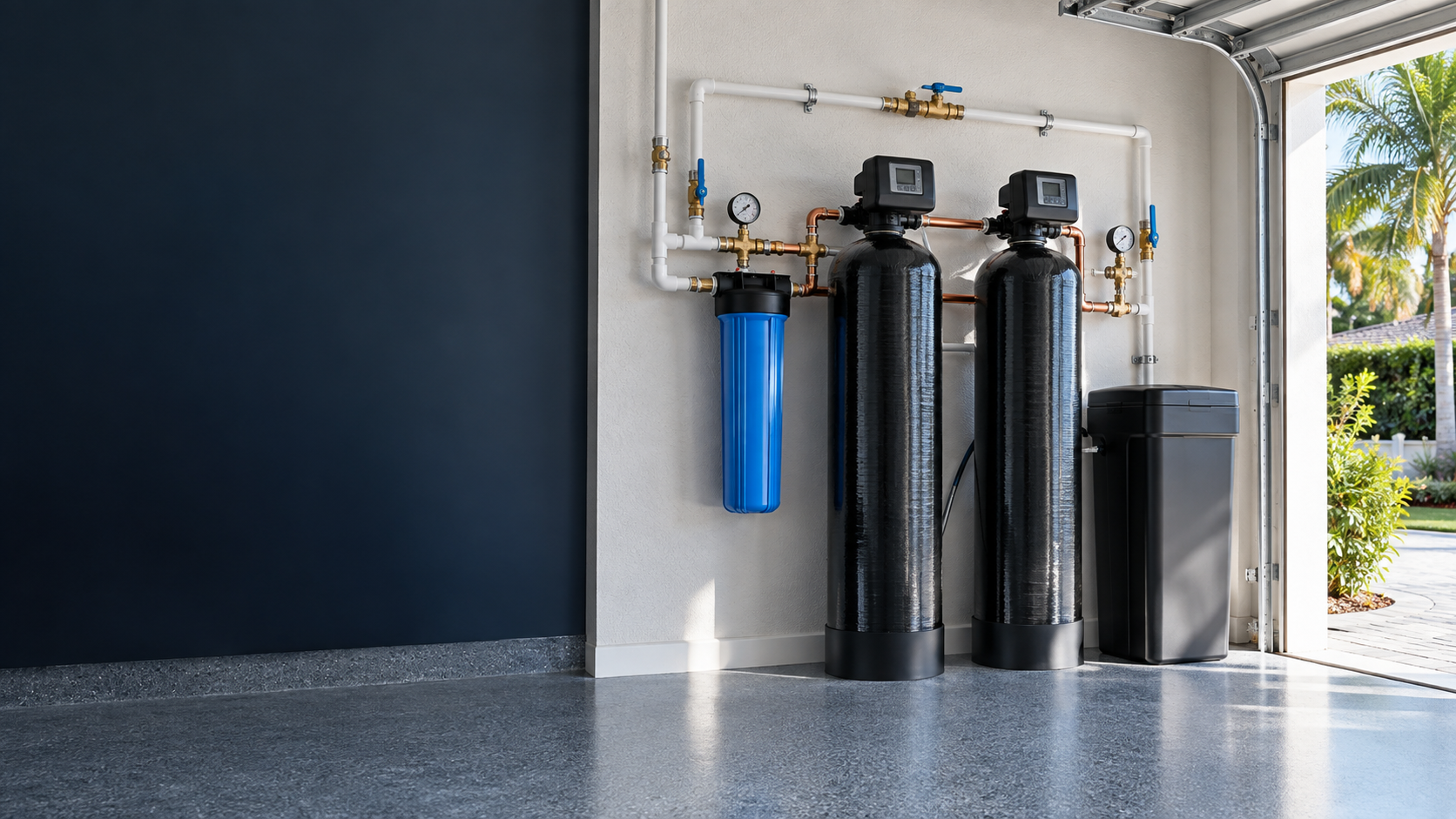
Dual-tank high-flow water filtration and softening system
MORE CAPACITY

Dual-Tank Performance

$3,895–$5,495

Dedicated carbon and softener tanks for higher flow, larger homes and longer contact time.

  • Separate treatment media
  • 3–5+ bathroom sizing
  • Better peak-flow flexibility

Planning ranges updated September 2026. Complex reroutes, electrical work, slab or wall access, well-water treatment and commercial equipment are quoted separately after testing.

See the complete Pembroke Pines cost guide

WHY PEMBROKE PINES IS DIFFERENT

Local water facts change what belongs in the tank.

Pembroke Pines draws groundwater from the Biscayne Aquifer through wells reported at 90 to 144 feet. The City softens and filters that water, then uses chloramine for distribution. In the 2025 report, chloramine averaged 2.8 parts per million as a running annual average, while the highest locational annual averages reported for total trihalomethanes and HAA5 were 26 and 23 parts per billion. Those values were within applicable limits. They are still useful design context: if a homeowner’s goal is reducing disinfectant taste or odor, carbon type, media volume and contact time matter.

Western Pembroke Pines communities such as Chapel Trail, Silver Lakes, Pembroke Falls, Pembroke Shores and Towngate include larger single-family homes that may place greater simultaneous demand on a system. A three-shower morning, washing machine and dishwasher create a different peak-flow requirement than one person filling a glass at the kitchen sink. Eastern neighborhoods and older homes may introduce different plumbing routes, pipe sizes and available installation spaces. That is why this site connects every recommendation to the property instead of pretending one “city package” fits every address.

The City discontinued added fluoride in June 2025 following Florida law. Its service-line inventory reported no lead service lines, while the water report correctly notes that lead exposure may still come from household plumbing components. Homeowners concerned about lead should use a properly collected sample and an accredited laboratory; a visual sales demonstration cannot answer that question. Read the official 2025 city report alongside our plain-English Pembroke Pines water guide.
POPULAR SOLUTIONS

Start with the problem you can see, smell or measure.

Built for real Pembroke Pines homes.

Homes across Chapel Trail, Pembroke Falls, Silver Lakes, Towngate and east Pembroke Pines may share a city name but differ in age, plumbing, household demand and service-entry layout. A useful assessment considers garage clearance, exterior exposure, drain access, tankless heaters, irrigation separation, peak shower demand and future service access. We do not invent neighborhood-specific contamination claims. We use the official utility report for context and recommend address-specific testing before equipment selection.

Fluoride addition ended in June 2025 following Florida law. The city report also notes that the utility’s service-line inventory contains no lead service lines, while correctly explaining that lead can still come from materials within household plumbing. If lead is the concern, use the correct sampling method and a certified laboratory rather than relying on a general sales demonstration.

Frequently asked questions

Is Pembroke Pines tap water safe?

The City reports that its drinking water meets federal and state requirements. Home treatment is usually selected for taste, odor, scale, appliance protection or point-of-use preferences—not as proof that compliant water is unsafe.

Does Pembroke Pines use chlorine or chloramine?

The 2025 city report lists chloramine as the disinfectant, with a 2025 running annual average of 2.8 ppm. Media and contact time should be selected accordingly.

Do I need a water softener?

Only testing and your goals can answer that. A softener addresses hardness minerals and scale; it is different from carbon filtration and reverse osmosis.

What does a whole-house filter remove?

That depends on its media and design. Carbon may target disinfectant taste and odor, sediment filtration targets particles, and specialty media should be selected for a verified problem.

How much does a system cost?

Professionally installed under-sink RO commonly plans at $695–$1,295. Combination whole-home filtration and softening commonly plans at $2,895–$3,595, while dedicated high-flow dual-tank systems often plan at $3,895–$5,495. Final price depends on testing, flow and site conditions.

Get a free water assessment

Tell us what you notice. A local water-treatment provider can follow up with options.

Request Free Assessment